


Melbourne rewards visitors who slow down just enough to notice its details: heritage arcades tucked behind tram lines, laneway cafes that take coffee as seriously as art, and locals debating sport, food and theatre in the same breath. This guide sets out two genuinely different itineraries, one for three days and one for five, with concrete timings, public transport tips, walking expectations, example prices and hotel-base advice so you can navigate the city with confidence in 2026.
How to Use This Guide, Where to Stay and Getting Around
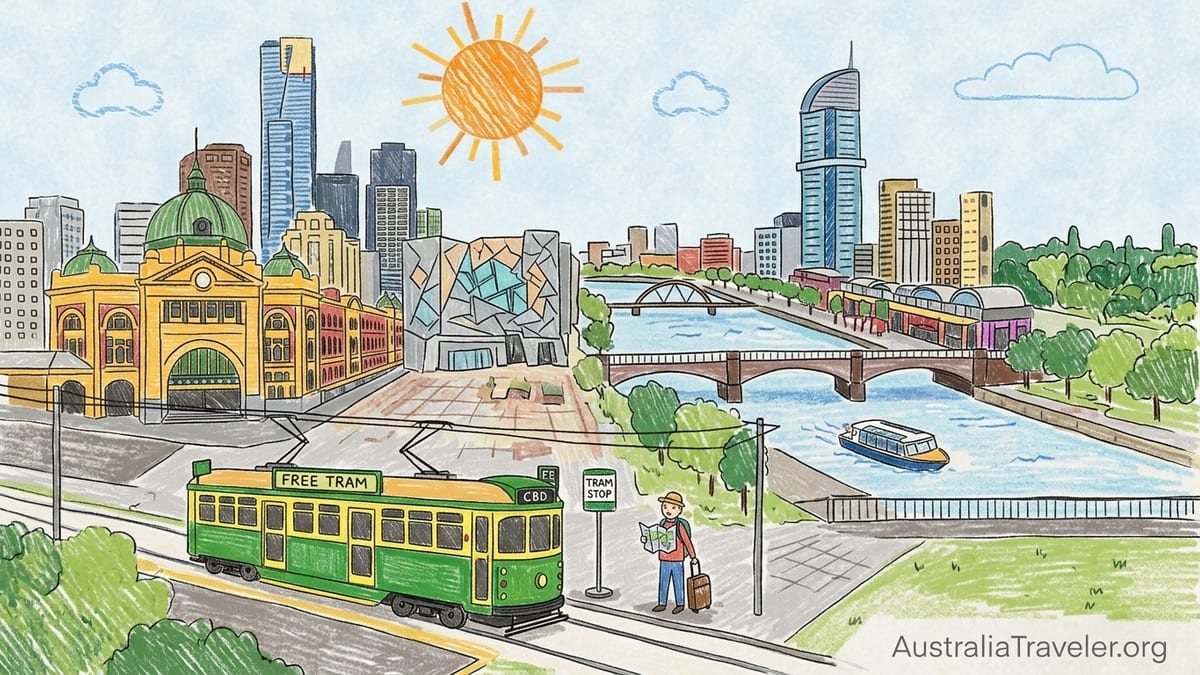
These itineraries assume you are visiting in 2026 and staying close to Melbourne’s central grid. For a first visit, the most practical hotel bases are around Federation Square and Flinders Street Station, the northern CBD near Melbourne Central, or Southbank just across the Yarra River. All three areas sit inside or just beside the Free Tram Zone, putting much of this plan within a short tram ride or a 10 to 20 minute walk.
The Free Tram Zone covers Melbourne’s central grid and Docklands. If your entire tram journey begins and ends inside this zone, you do not need a myki card and you should not tap on. Once you travel beyond the zone border, such as heading to St Kilda or Carlton, you must pay a fare. Melbourne uses the myki smartcard system on most trains, trams and buses. You can buy and top up a physical myki at station machines, some tram stops, 7-Eleven stores and many newsagents, or use approved contactless options where available. Current policy allows payment either with myki or with contactless cards and devices on most metropolitan services, but visitors should check at the airport or a staffed station for the latest coverage before assuming every vehicle accepts tap and go.
For most inner-city trips you only need a Zone 1 fare. In late 2026, the daily cap for full-fare adult travel within Melbourne is around 10 to 11 Australian dollars when using myki money or equivalent contactless fares, meaning once you hit the cap you will not be charged more that day. That makes frequent short tram hops and train rides affordable if you follow these itineraries. Always remember that within the Free Tram Zone you simply board and ride without tapping on.
Walking expectations in this guide are realistic for reasonably fit adults. A typical city day here involves 8,000 to 12,000 steps, or roughly 6 to 9 kilometres, broken into short segments between sights and coffee stops. Melbourne’s weather can swing from sun to showers in one afternoon, so shoes with some grip, a compact umbrella and a light layer are wise in every season.
Day 1 (3-Day Plan): Classic CBD, Laneways and Queen Victoria Market
Morning (9:00 to 13:00): Begin at Federation Square, opposite Flinders Street Station. If you are staying nearby you can walk; otherwise ride any tram into the Free Tram Zone and alight at the Federation Square or Flinders Street stops without using myki. Spend 30 to 45 minutes exploring the plaza and the viewpoints along the Yarra River. Pop into the Ian Potter Centre inside Fed Square if rain sets in; its Australian art collection is free to enter and works as a perfect rainy-day backup.
From Federation Square, cross Flinders Street to admire Flinders Street Station’s Edwardian facade. Many visitors simply photograph it, but if you arrive by suburban train you will also appreciate how it still functions as a busy commuter hub. Continue a few minutes on foot to Hosier Lane to see Melbourne’s most famous legal graffiti wall. Allow 20 to 30 minutes to wander the adjacent lanes. Expect about 1.5 to 2 kilometres of walking in this late morning stretch.
Late morning into lunch (11:30 to 14:00): Head north-west on foot towards the Block Arcade, a richly decorated 19th-century shopping arcade. The stroll from Hosier Lane takes about 10 to 15 minutes. Inside, take time to look up at the mosaic floors and glass roof and, if you want a classic experience, join the queue at Hopetoun Tea Rooms or another heritage-style cafe for pastries and coffee. A sit-down coffee and cake is likely to cost around 12 to 18 Australian dollars per person.
From here, continue along Collins or Elizabeth Street towards Queen Victoria Market. Walking will take roughly 20 minutes, or you can catch any northbound tram on Elizabeth Street from within the Free Tram Zone and alight near the market without tapping on. Queen Victoria Market is open most days but not Mondays or Wednesdays, so plan your three-day trip so that Day 1 falls on a trading day, such as Tuesday, Thursday, Friday, Saturday or Sunday. Spend 60 to 90 minutes grazing through the fresh produce halls, deli section and food court. A casual lunch of market fish and chips, a borek and coffee can sit comfortably around 20 to 30 Australian dollars per adult.
Afternoon and evening (14:00 to 19:30): After the market, walk or tram back towards the central grid and take time to duck into smaller arcades like the Royal Arcade, and laneways such as Degraves Street and Centre Place. This is prime Melbourne coffee territory. A flat white from a laneway cafe generally costs about 5 to 6 Australian dollars in 2026. Plan 1.5 to 2 hours of relaxed wandering and people-watching. If rain arrives, use this time to explore the heritage interiors of the General Post Office building on Bourke Street or spend an hour at the State Library Victoria, an easy 10 minute walk north of the Bourke Street Mall.
For dinner, consider Chinatown along Little Bourke Street, around 10 minutes’ walk from Federation Square, where dumpling houses and modern Chinese bistros line the laneway. A sit-down dinner with shared plates and a drink might run 40 to 60 Australian dollars per person in a midrange venue in 2026. Return to your central hotel on foot or by tram within the Free Tram Zone.
Day 2 (3-Day Plan): Gardens, Art, Southbank and City Views
Morning (9:00 to 13:00): Start your day at the Royal Botanic Gardens, one of Melbourne’s most loved outdoor spaces. From Federation Square or Flinders Street Station, it is about a 20 to 25 minute walk along St Kilda Road and through the edge of the gardens, or a short tram ride heading south along St Kilda Road using a Zone 1 fare. Expect about 3 to 4 kilometres of walking by lunchtime if you explore several garden sections. Visit the Ornamental Lake, the arid garden and the Guilfoyle’s Volcano lookout. Entry is free, so even budget travellers can comfortably linger here for two hours.
If the weather is wet, reduce your time outdoors and instead begin at the National Gallery of Victoria along St Kilda Road. The NGV International building opens mid-morning and has an often photographed water-wall at the main entrance. General collection entry is free, with special exhibitions typically charging from around 30 to 45 Australian dollars per adult, depending on the show and date. Spend 1.5 to 2 hours exploring before continuing to Southbank.
Lunch and early afternoon (13:00 to 16:30): Walk from the NGV or the gardens to Southbank Promenade in about 10 minutes. This stretch along the Yarra River is lined with restaurants and bars ranging from casual burger joints to upscale dining rooms. For a reasonable midrange lunch, budget 30 to 45 Australian dollars per person for a main dish and non-alcoholic drink in 2026, more if you add wine or cocktails. Under cover seating along Southbank works as a decent rainy-day solution without losing the river views.
After lunch, enjoy a Yarra River experience. A 1-hour sightseeing cruise departing from near Southbank or Federation Square typically costs from about 30 to 40 Australian dollars per adult, while simple kayak tours are usually a little more. The cruise offers a relaxed way to view the skyline, Docklands and sporting precinct without more walking. Reserve 1.5 to 2 hours including boarding, the cruise and a short waiting period.
Late afternoon and evening (16:30 to 21:30): For a city panorama, visit an observation deck. Melbourne Skydeck in Southbank currently opens daily from midday to about 21:00, with last entry around 20:30 during the 2026 season. General admission for adults usually starts around the low 30s in Australian dollars, with extra charges for experiences like The Edge glass cube or virtual reality packages. Plan 60 to 90 minutes from entry to exit, timing your visit for sunset if possible. In wet weather, the views can still be dramatic as clouds move across Port Phillip Bay.
Have dinner nearby in Southbank, where options range from casual Italian on the promenade to fine dining overlooking the river. A midrange dinner with a glass of wine might cost 50 to 80 Australian dollars per person. Afterwards you can either walk back across Princes Bridge to your hotel near Federation Square or take a short tram ride north, often within the Free Tram Zone, depending on your exact stop.
Day 3 (3-Day Plan): Carlton, Fitzroy, Collingwood and Coffee Culture
Morning (9:00 to 12:30): Begin by heading to Carlton for a mix of gardens, museums and cafes. From the CBD, trams along Swanston Street or Lygon Street heading north whisk you into Carlton in about 10 minutes with a Zone 1 fare. If you leave from near Melbourne Central, walking to the northern edge of the CBD and into Carlton Gardens takes about 15 minutes. Spend an hour around Carlton Gardens, the Royal Exhibition Building exterior and the Melbourne Museum precinct. Museum entry prices can change with exhibitions, but expect adult tickets somewhere in the 20 to 30 Australian dollar range; check the latest at the museum before committing it to your budget.
By late morning, make your way to Lygon Street, Carlton’s so-called Little Italy. This strip offers endless espresso bars and pasta houses. Stop for a mid-morning coffee and cannoli, or an early lunch. A proper Melbourne espresso or flat white will usually cost about 5 to 6 Australian dollars, while a plate of pasta in a sit-down trattoria might range from 25 to 35 Australian dollars.
Afternoon (12:30 to 17:30): After lunch, walk or tram east to Fitzroy, a creative, bohemian neighbourhood. The stroll from Lygon Street to Brunswick Street in Fitzroy takes around 20 to 25 minutes, or you can take a short tram ride along Victoria Parade and Brunswick Street. Brunswick Street, Gertrude Street and Smith Street in adjacent Collingwood are known for their small galleries, vintage clothing stores and bars. Plan about 3 to 4 kilometres of gentle walking as you drift between these streets.
This is also the place to schedule a deeper Melbourne coffee experience. Look for roaster-cafes where beans are roasted on-site and tasting flights are available, or book ahead with a local roastery that runs cupping or brewing workshops. A 60 to 90 minute coffee masterclass may cost in the rough range of 50 to 90 Australian dollars per person, depending on group size and inclusions. In wet weather, lean into the cafe and gallery scene rather than street art and outdoor seating.
Evening (17:30 to 22:00): Stay in Fitzroy or Collingwood for dinner to see the area in full evening swing. You will find everything from casual wood-fired pizza to inventive plant-based menus and natural wine bars. A midrange dinner with shared plates and drinks will often sit around 60 to 90 Australian dollars per person in 2026. To return to your hotel, catch a tram back towards the CBD using your myki or contactless payment, or walk south to re-enter the Free Tram Zone and switch to a free tram from there.
Days 1–3 (5-Day Plan): A Different City Focus
If you have five days, avoid simply stretching the three-day plan. Instead, reframe the first three days with fresh angles. For the five-day version, base yourself either near Southern Cross Station for easier access to regional trains and airport buses, or around the eastern CBD near Parliament if you want to be close to the theatre district and parks. Southbank also remains a strong base if you prefer river views.
On Day 1 of the five-day plan, still orient yourself around Federation Square and the historic CBD, but give more time to cultural interiors. Spend 60 to 90 minutes at the Koorie Heritage Trust in Fed Square for an introduction to the Aboriginal history and contemporary culture of south-eastern Australia, then walk across to St Paul’s Cathedral for a short visit. After lunch near Degraves Street, swap Queen Victoria Market for the lesser-known but atmospheric Block and Royal Arcades and the Hardware Lane precinct, focusing on architecture and independent boutiques rather than food shopping.
For Day 2, prioritise the gallery and arts side of the city. Visit both NGV International on St Kilda Road and the NGV Australia space at Federation Square, if exhibitions appeal. A combined day of art, including a paid blockbuster show and time in the free collections, can easily fill 5 to 6 hours. In wet conditions, this plan becomes even more attractive. For dinner, explore the theatre district around Little Bourke and Exhibition Streets or head to the Paris end of Collins Street for pre- or post-show cocktails.
Day 3 in the five-day plan can then focus on the city’s sporting and riverside character. Walk from the CBD or ride a short tram east to the Melbourne Cricket Ground and surrounding Melbourne and Olympic Parks precinct. Even if no match is on, guided MCG tours and the Australian Sports Museum provide several hours of indoor activity. Later, follow the Yarra River trail on foot or by bike back towards Birrarung Marr and Fed Square, stopping at riverside bars as daylight fades. This variation keeps your first three days urban and cultural, leaving room for coastal and regional experiences later.
Day 4 (5-Day Plan): St Kilda, Brighton Beach and Bayside
Morning (9:00 to 12:30): Travel from the CBD to St Kilda by tram. Routes from Swanston Street or along St Kilda Road reach St Kilda in around 25 to 30 minutes using a Zone 1 fare on myki or approved contactless payment. Alight near Luna Park or Acland Street. St Kilda’s foreshore and pier area involve moderate walking, typically 3 to 4 kilometres if you stroll from Luna Park to the pier and along the Esplanade. If conditions are windy or rainy, spend more time enjoying cake shops along Acland Street and cafes with bay views, ducking outside only for short walks between breaks.
St Kilda’s iconic cake shops offer slices laden with cream and fruit at around 8 to 12 Australian dollars, while brunch cafes plate up dishes like smashed avocado on sourdough for 22 to 28 Australian dollars. Give yourself a long brunch and people-watching break here. Families could also allow time for rides at Luna Park when operating, adjusting timing to park hours and ticket prices, which are usually structured per ride or as ride passes.
Afternoon (12:30 to 17:30): From St Kilda, make your way to Brighton Beach to see the colourful bathing boxes. The simplest route uses a tram back towards the CBD to connect with the Sandringham train line from Flinders Street Station, or you can catch a direct bus from parts of St Kilda to nearby suburbs and then train the final section. Using train services, expect 25 to 35 minutes from the CBD to Brighton Beach Station. From the station it is a 10 to 15 minute walk along the sand to the densest cluster of bathing boxes, adding roughly 2 to 3 kilometres of walking.
Weather matters on this day. In clear conditions, the views back to the city skyline and across the bay are superb. In rain or strong wind, consider shortening your time on the beach and instead hopping between sheltered cafes in Brighton’s small shopping village. Late afternoon, return to the CBD by train. A round-trip with multiple tram and train segments remains covered by your Zone 1 daily cap.
Evening (17:30 to 21:30): Back in the city, choose a different dinner neighbourhood to round out the day. Southbank offers waterfront restaurants, while Docklands, reached by free tram, has a growing cluster of casual eateries and harbour views. Alternately, head to St Kilda Road and Domain precinct for quieter local bistros. A midrange dinner for two adults with mains, shared dessert and a couple of drinks will often total in the 120 to 180 Australian dollar range in 2026.
Day 5 (5-Day Plan): Choosing the Right Day Trip and Why the Great Ocean Road Needs Longer
For your fifth day, choose one substantial excursion that matches your interests and tolerance for travel time. Three common options from Melbourne are the Yarra Valley wine region, the Dandenong Ranges and Phillip Island. Each can be reached by a mix of train and local bus plus tours, or via organised coach day trips departing from the CBD.
The Yarra Valley sits roughly 60 to 90 minutes’ drive from central Melbourne, depending on traffic and where you stop. Many visitors join full-day wine tours that include 3 to 4 cellar doors, a winery lunch and return transport, often costing in the vicinity of 180 to 260 Australian dollars per adult in 2026. While wine is the headline, there are also gin distilleries, chocolate and ice cream factories and wildlife encounters, which make the area appealing even to those who drink lightly. If heavy rain is forecast, be aware that much of the enjoyment comes from vineyard views; tastings are still indoors, but scenery may be muted.
The Dandenong Ranges, about an hour from the city, appeal to nature and nostalgia lovers. You can combine a ride on the heritage Puffing Billy steam railway with walks among towering mountain ash trees and fern gullies near Olinda or Sassafras. Some packaged day trips bundle train tickets, forest walks and transfers, with prices broadly comparable to entry-level wine tours. In wet weather, the mist among the trees creates a moody atmosphere, but trails can be muddy, so waterproof footwear helps.
Phillip Island is a longer but rewarding day trip if wildlife is a priority. It is known for its nightly penguin parade, where visitors watch little penguins come ashore at dusk from raised boardwalks. Tours from Melbourne often depart mid-afternoon and return late at night after the parade, with total travel time of about 2 hours each way by coach. Packages that include transport, general viewing tickets and sometimes extra stops such as the Koala Conservation Reserve typically cost at least 160 to 220 Australian dollars per adult. Since the penguins emerge after dark, pack warm layers, even in summer, and consider this a long, late day.
Many visitors are tempted to add the Great Ocean Road as a day trip to see the Twelve Apostles and dramatic coastal scenery. While day tours do operate, this is an unusually long single-day commitment from Melbourne. A typical loop from the city to the Twelve Apostles and back covers more than 500 kilometres and involves 10 to 12 hours on the road, much of it on winding coastal sections. That leaves relatively short stops at viewpoints and limited flexibility for exploring towns like Lorne or Apollo Bay. If the Great Ocean Road is a priority, it deserves at least one overnight stop in a town such as Lorne, Apollo Bay or Port Campbell so you can see sunset or sunrise on the coast, walk short trails and enjoy the beaches without constant time pressure.
Costs for Two Adults: Budget, Midrange and Luxury
Accommodation prices in Melbourne fluctuate with season and events, particularly during major sporting tournaments or festivals. The following examples describe realistic daily spending for two adults in late 2026, excluding flights and major shopping, and assuming you follow the activities in these itineraries.
On a budget, two adults might stay in a private room at a central hostel or basic hotel near Southern Cross or the northern CBD from roughly 120 to 180 Australian dollars per night, eat simple breakfasts from bakeries, choose market and food court lunches around 15 to 25 Australian dollars per person and dine at casual eateries with mains under 30 Australian dollars. Add a Zone 1 daily fare cap for each person plus one paid attraction such as the Skydeck on a single day, and a realistic total comes to around 260 to 360 Australian dollars per day for two, rising on excursion days like Phillip Island or the Yarra Valley.
Midrange travellers can expect to pay somewhere around 220 to 350 Australian dollars per night for a well-located four-star hotel in the CBD or Southbank, with more generous dining budgets of 30 to 45 Australian dollars per person for lunch and 50 to 80 Australian dollars per person for dinner with a drink. Factoring in public transport, a couple of paid attractions and coffees or snacks, daily costs often land between 450 and 650 Australian dollars for two in the city, with regional day trips adding 150 to 250 Australian dollars per person on top.
Luxury visitors choosing five-star hotels or premium serviced apartments along the river, in the Paris end of Collins Street or near the sporting precinct commonly see nightly rates from 400 Australian dollars upwards, with top properties exceeding 700 Australian dollars on busy dates. Add fine dining experiences along Southbank or in inner suburbs like Fitzroy, where a tasting menu might begin around 150 Australian dollars per person before drinks, and private or small-group tours for Yarra Valley or Phillip Island. It is easy for daily spending to exceed 900 to 1,400 Australian dollars per couple when leaning into these premium choices.
Adapting the Itineraries for Families, Couples, Culture Fans and Sports Lovers
Families can follow the three- or five-day routes with a few tweaks. On Day 1, focus less on boutique arcades and more on interactive stops like the State Library’s children’s areas or the Melbourne Museum on Day 3. Swap some coffee breaks for gelato or playground time in Carlton Gardens or along the Yarra. Day 4 in St Kilda and Brighton becomes a highlight with beach time and Luna Park rides, while Day 5’s choice of Phillip Island usually appeals strongly to children thanks to the penguin parade and wildlife experiences. Remember that concession and family pricing often applies on public transport and at attractions, so check for family passes rather than multiplying adult fares.
Couples may lean into the atmosphere of laneway bars, shared plates and views. In the three-day version, consider timing your Yarra River cruise for twilight on Day 2, followed by cocktails high above the city on an observation deck or rooftop bar. In the five-day plan, add a Yarra Valley wine day trip with a relaxed lunch and perhaps a hot-air balloon flight if budget allows. Evening walks along Southbank or quiet streets in East Melbourne offer a softer contrast to the busier CBD grid.
Culture-focused visitors should allocate more time to galleries, museums and performance. Across both itineraries, double the suggested time in NGV spaces, add visits to smaller venues like the Australian Centre for Contemporary Art in Southbank or the Immigration Museum near the Yarra, and consider booking theatre or concert tickets around the East End theatre district. Guided walking tours focusing on architecture, Aboriginal history or street art can replace or supplement some self-guided laneway wanderings.
Sports fans will find Melbourne particularly rewarding. Try to align your trip with an Australian Football League match at the MCG or Marvel Stadium, a cricket Test match, or the Australian Open tennis. On Day 3 of the five-day plan, expand your time in the sporting precinct, taking stadium tours or visiting the Australian Sports Museum. Combine this with a walk along the Yarra where rowers train and local running clubs meet. For meals, explore pubs near Richmond Station that fill with pre-game supporters on weekend afternoons, providing a vivid slice of local life.
FAQ
Q1. How many days do I really need in Melbourne?
Three days is enough to see central highlights, gardens and inner neighbourhoods like Fitzroy and Carlton. Five days lets you add bayside suburbs such as St Kilda and Brighton plus a full regional day trip to the Yarra Valley, Dandenong Ranges or Phillip Island without rushing.
Q2. Is the Free Tram Zone really free for visitors?
Yes. If your tram trip begins and ends entirely within Melbourne’s designated Free Tram Zone, you do not need a myki card or any other ticket and you should not tap on. As soon as you travel beyond the zone boundary, standard fares apply and you must use myki or approved contactless payment.
Q3. Do I still need a myki card if contactless payment exists?
In late 2026, myki remains the primary ticketing system in Melbourne. Contactless options using bank cards or devices are available on most, but not necessarily every, metropolitan train, tram and bus route. Visitors who want certainty and access to concession or capped fares may still prefer to buy and load a myki, especially if their plans include regional trains where contactless is not yet universal.
Q4. When is Queen Victoria Market open?
Queen Victoria Market trades most days but closes on Mondays and Wednesdays. For a standard three-day visit, aim to schedule your CBD and market day on a Tuesday, Thursday, Friday, Saturday or Sunday so you can explore its produce halls, deli section and food stalls.
Q5. Is Melbourne walkable or should I rely on trams?
Central Melbourne is very walkable, with most CBD attractions within 10 to 20 minutes on foot of each other. However, trams are invaluable for reaching suburbs like St Kilda, Carlton and Fitzroy, or simply reducing steps on busy days. Using a mix of walking and trams is the most efficient way to follow these itineraries.
Q6. What does a realistic daily budget look like for two adults?
A budget-conscious couple can often manage on around 260 to 360 Australian dollars per day in the city, including simple accommodation, meals, transport and one modest paid attraction. Midrange travellers are more likely to spend 450 to 650 dollars daily, while luxury visitors can easily exceed 900 dollars once five-star hotels, fine dining and private tours are included.
Q7. How should I adjust the itinerary in bad weather?
Swap outdoor segments such as the Botanic Gardens, long river walks or Brighton Beach for indoor options like galleries, museums, the State Library, shopping arcades and covered cafe precincts. The NGV, Koorie Heritage Trust, Immigration Museum and Melbourne Museum all provide several hours of shelter without sacrificing cultural depth.
Q8. Is the Great Ocean Road worth it as a day trip?
While it is technically possible to visit the Great Ocean Road on a long coach day tour, this usually involves 10 to 12 hours on the road with brief stops at major lookouts. Because the route covers more than 500 kilometres return with many winding sections, it is far more rewarding to stay at least one night in a coastal town so you can enjoy sunrise or sunset, short walks and relaxed meals.
Q9. Which regional day trip is best for a first-time visitor?
If you enjoy wine and food, the Yarra Valley is an excellent introduction, combining cellar doors, a winery lunch and scenic countryside. Nature lovers may prefer the Dandenong Ranges for forests and a heritage train ride, while wildlife enthusiasts often choose Phillip Island to experience the evening penguin parade and coastal views.
Q10. Is Melbourne safe to explore at night?
Melbourne’s central areas, Southbank and well-trafficked suburbs like Fitzroy and St Kilda are generally busy and feel safe into the evening, especially on weekends. As in any large city, stay aware of your surroundings, avoid poorly lit backstreets, watch your belongings in crowded venues and use trams, trains or licensed taxis and rideshare services to return to your accommodation late at night.