


Sydney is a harbour city, a beach city and a neighbourhood city all at once. The trick for first‑time visitors is not just ticking off famous landmarks, but grouping nearby sights so you can walk, ferry and train your way through the city without wasting time in transit. This guide gathers 25 essential experiences, organised by area, so you can build practical sightseeing days that combine the Opera House and Harbour Bridge with beaches, museums, food markets and Aboriginal cultural experiences.
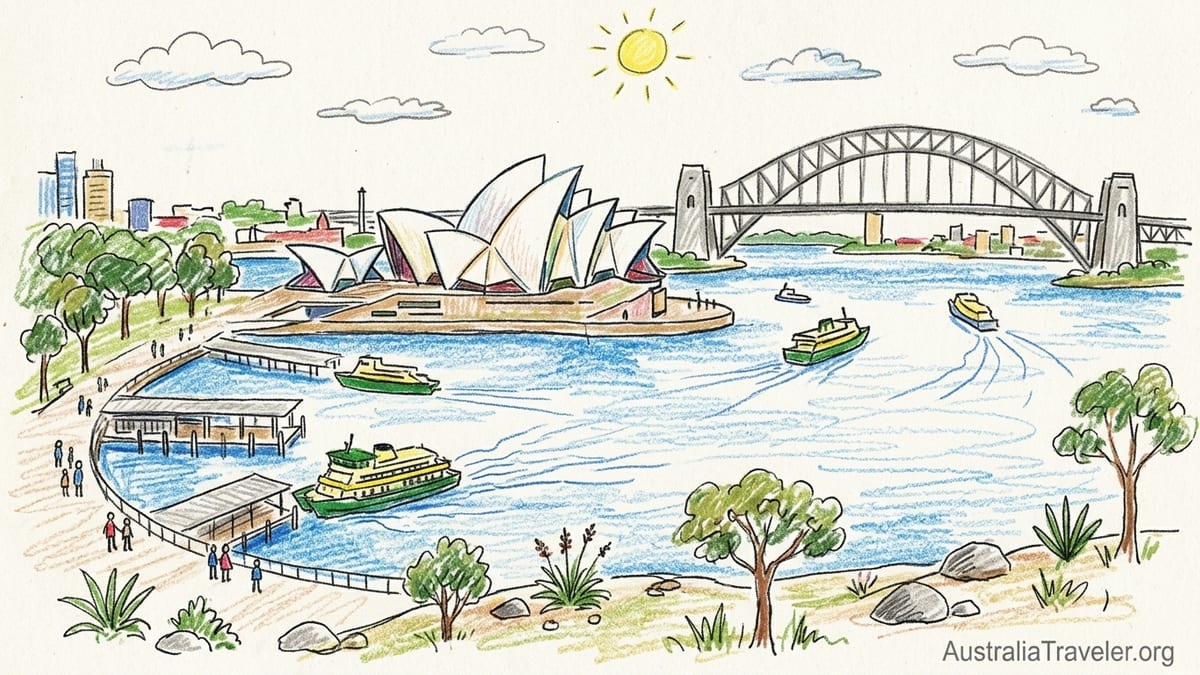
Sydney Harbour Icons: Opera House, Bridge and Circular Quay
Sydney Harbour is known traditionally as Warrane, on the land and waters of the Gadigal people of the Eora Nation, who remain its Traditional Custodians. As you explore Circular Quay, the Opera House and Harbour Bridge, look for plaques and interpretation panels that acknowledge this history, and consider joining an Aboriginal guided experience to hear the stories of the harbour from First Nations voices. Even a simple pause on the promenade at Circular Quay, watching the green and yellow ferries against the sails of the Opera House, becomes richer when you know you are standing in one of the earliest contact zones between Gadigal people and European colonists.
Viewing the Sydney Opera House from outside is free and should be on every itinerary. Most visitors walk the broad promenade from Circular Quay to the building, circling around the sail‑like shells, climbing the monumental steps and stopping for coffee or a drink at the waterfront bars. Allow at least one hour to wander, take photographs from different angles and enjoy the harbour views. The site is open daily, though individual venues inside keep their own hours, and it is fully accessible with ramps and lifts. Circular Quay train and light rail stations are a few minutes’ walk away, and you do not need to book anything in advance just to explore the exterior.
To go inside, book a Sydney Opera House guided tour or performance. The standard one‑hour tour is typically priced around 50 Australian dollars for adults, with family and concession discounts, and operates several times daily, though sessions do not run on certain major holidays such as Christmas Day. Tours take you through selected performance spaces, explain the complex construction history and show backstage details when available. Photography rules vary by venue, but guides are clear about where you can and cannot shoot. Advance online booking is strongly recommended for popular morning slots and during school holidays, while same‑day tickets may be available at quieter times.
Across the water, the Sydney Harbour Bridge dominates the skyline. Walking across the bridge on the free eastern footpath is one of the best value views in Sydney. Stairs at Cumberland Street in The Rocks, close to Circular Quay train station, bring you up to the deck; from there it takes about 20 to 30 minutes to stroll across to Milsons Point with sweeping views back to the Opera House. The walkway is open daily and is suitable for most fitness levels, though there are stairs and some exposure to wind. You do not need a ticket or reservation for the footpath.
The Rocks, Barangaroo and Aboriginal Perspectives
The Rocks, immediately west of Circular Quay, is Sydney’s oldest surviving colonial quarter and sits on land traditionally associated with the Gadigal people. Today it is a mix of cobbled laneways, historic pubs and galleries, with weekend markets that fill George Street and the surrounds. Visitors typically spend two to three hours here, including a guided walking tour that covers early convict history and the dramatic battles over saving The Rocks from demolition in the 1970s. Many tours leave from near the Museum of Contemporary Art at Circular Quay and operate most days. While you can explore the precinct for free, guided walks are paid experiences and should be booked ahead, especially on Saturdays.
Barangaroo, a short harbourfront walk from The Rocks, has been reshaped into a modern financial district framed by a significant public park. Barangaroo Reserve, at the northern end, is landscaped with native plantings and sandstone terraces that step down to the water, deliberately evoking the pre‑colonial shoreline. Entry is free, open daily and popular for picnics and sunset views across the harbour. You can reach it from Wynyard station via a pedestrian tunnel or by walking along the waterfront from Circular Quay. Because this is a large, open public space, no booking is required.
For a deeper understanding of Aboriginal connections to the harbour, look for dedicated First Nations experiences, such as Aboriginal cultural walking tours around The Rocks and Barangaroo or specialised harbour cruises led by Aboriginal guides. These typically run for 90 minutes to two hours, with prices broadly comparable to other city walking tours. A cultural walk might include tasting bush foods, learning about traditional fishing techniques and hearing stories of resistance and resilience after colonisation. Because departures and operators change, it is best to check dates, times and prices close to your visit and reserve a place at least a few days in advance.
A short distance inland you will find the Museum of Contemporary Art Australia on Circular Quay and the nearby Justice & Police Museum. Both offer context for Sydney’s evolving identity. The MCA is free to enter, with occasional paid special exhibitions, and is easily combined with a stroll through The Rocks. Plan an hour for a quick look or up to half a day if you enjoy contemporary art. The building has lifts, accessible toilets and a rooftop cafe with harbour views, and it is a three‑minute walk from Circular Quay transport hubs.
Royal Botanic Garden, Harbour Walks and Art & History Museums
From the Opera House forecourt you can walk directly into the Royal Botanic Garden Sydney, which curves around Farm Cove. This is one of the city’s most rewarding free attractions, with lawns, ponds, glasshouses and harbour viewpoints. Many first‑time visitors follow the path to Mrs Macquarie’s Chair, a sandstone seat carved by convicts, for a postcard‑worthy view back across the water to the Opera House and Harbour Bridge. The gardens are usually open daily from morning until sunset and have multiple gates, with the main entrances near the Opera House and on Macquarie Street. Allow at least 90 minutes for a relaxed loop.
The Royal Botanic Garden sits on Gadigal land, and staff work with Aboriginal educators on programs that explore long‑standing relationships between First Nations people and native plants. Paid Aboriginal heritage tours are offered on selected days and typically last about 90 minutes, focusing on bush foods, medicine and seasonal cycles. Prices are generally in line with other specialist guided walks in Sydney. Because departures and seasonal schedules can change, it is wise to confirm details and book in advance if this is a priority for your trip.
On Macquarie Street, a short walk from the gardens, two major museums help frame New South Wales and Australian history. The State Library of New South Wales combines free exhibitions with a grand reading room, while the Australian Museum, near Hyde Park, is the country’s oldest museum, with natural history and culture galleries. Entry policies vary, but in recent years general admission has either been free or modestly priced, with extra fees for blockbuster temporary shows. Both venues are accessible, open daily except some holidays and easily reached by train to St James or Museum stations. Visitors commonly budget two to three hours for the Australian Museum and about an hour for the State Library’s public spaces.
Just across the Domain, the Art Gallery of New South Wales spans Australian and international art, with a significant collection of Aboriginal and Torres Strait Islander works. The gallery has introduced a new building in recent years, connected to the original site across a landscaped art garden. General entry is free, with charges for selected special exhibitions. Many travelers pair the gallery with a walk through the Royal Botanic Garden and a sunset stop at Mrs Macquarie’s Chair for one full day focused on culture and harbour scenery.
Darling Harbour, Barangaroo South and Sydney Fish Market
West of the city centre, Darling Harbour is a family‑oriented waterfront precinct packed with attractions, including SEA LIFE Sydney Aquarium, WILD LIFE Sydney Zoo and the Australian National Maritime Museum. Each attraction has separate admission, and combination tickets that bundle multiple venues are widely sold. Depending on your interests, you might spend a full day here, from morning aquarium visits to evening harbourfront dining. Darling Harbour is mostly flat and accessible, with step‑free routes from Town Hall and Pyrmont Bay light rail stops. Paid parking is available, though public transport is usually easier.
The Australian National Maritime Museum is especially worthwhile for visitors interested in Australia’s naval and migration history. Exhibits cover Indigenous maritime cultures, early exploration, immigration by sea and modern naval operations. Tickets often include access to historic ships and a submarine moored on the wharf, which require climbing steep stairs and ladders, so accessibility varies by vessel. Plan at least two to three hours if you want to go on board multiple ships. The museum is open daily except Christmas Day, and advance online tickets can sometimes be a few dollars cheaper than walk‑up prices.
A short walk or light rail ride from Darling Harbour brings you to Blackwattle Bay and the new Sydney Fish Market, which opened at its relocated site on 19 January 2026 after years of planning and construction. The complex combines wholesale and retail seafood halls with cafes, restaurants and cooking classes. Visitors typically wander the market floor, choose freshly prepared seafood platters or sashimi and sit at shared outdoor tables overlooking the bay. The market operates daily, with mornings being the liveliest time to see the fish displays at their peak. There is paid parking on site, but many locals prefer the light rail to the nearby Fish Market stop or a 20‑minute walk from Pyrmont.
South of Barangaroo, the waterfront path continues past King Street Wharf to connect with Darling Harbour, making it possible to stitch together a full harbourfront walking day from Circular Quay through The Rocks, Barangaroo and down to the aquarium and beyond. If you enjoy walking, this is a way to see multiple precincts without doubling back. For those with limited mobility, inner‑city ferries and light rail services link many of the same points with step‑free boarding at most stops.
Harbour Ferries, Manly, Taronga Zoo and Watsons Bay
Sydney’s public ferries are both practical transport and classic sightseeing experiences. The most famous ride is the Manly ferry, which runs from Circular Quay across the harbour to Manly Wharf. The trip takes about 20 to 30 minutes each way and offers front‑row views of the Opera House, Harbour Bridge and harbour heads. Standard Opal card fares apply, and services operate frequently from early morning to late evening. Travellers often spend half a day in Manly, combining a stroll along the Corso, a swim at Manly Beach and a coastal walk to Shelly Beach.
Taronga Zoo Sydney, on the lower North Shore, is another harbour highlight. A common way to arrive is by ferry from Circular Quay to Taronga Zoo Wharf, followed by a short bus ride or a steep walk up to the main entrance. Day tickets purchased directly from the zoo currently list gate prices around 57 Australian dollars for adults, with slightly cheaper online rates when buying in advance, and discounted child and concession tickets. Some tour and ferry operators sell bundles that include zoo entry plus return harbour transport, which can simplify logistics for families. The zoo is usually open every day from morning until late afternoon, and a full visit, including keeper talks and the new Australian wildlife precinct, easily fills four to five hours.
Taronga is built on a hillside overlooking the harbour. The main paths are paved, and there are lifts and accessible routes, but visitors with mobility challenges may want to plan their route to avoid repeated steep climbs. Inside the zoo, extra experiences such as behind‑the‑scenes tours or the Nura Diya Aboriginal‑led experience are sold separately and require advance booking due to limited capacity. Public buses connect Taronga with central Sydney and the North Shore, but for most visitors the ferry is the most scenic and straightforward option.
Watsons Bay, near the entrance to Sydney Harbour, is another easy ferry trip from Circular Quay and pairs well with an afternoon swim and seafood. Once you arrive at the wharf, there is a small harbour beach, a grassy park and popular takeaway fish‑and‑chips spots. From here, short walking tracks lead up to the Gap, a dramatic ocean cliff viewpoint, and along the South Head heritage trail, which passes lighthouses and historic gun emplacements. The area can be explored in two to three hours, not counting time spent lingering over a meal. Ferries run most of the day, with extra buses linking Watsons Bay to Bondi and the eastern suburbs.
Bondi, Coastal Walks and Neighbourhood Life in Newtown
Bondi Beach is Sydney’s most famous strip of sand and works best when you combine a quick visit with a coastal walk. From the city, take a train to Bondi Junction and transfer to a local bus, or use direct buses from the CBD. At Bondi you can swim between the red and yellow flags under lifeguard supervision, learn to surf with one of the local surf schools or simply walk the promenade, stopping for coffee at Campbell Parade cafes. Facilities include showers, change rooms and plenty of food options. Bondi is patrolled on most days, but always check the latest conditions and flags before entering the water.
The Bondi to Coogee coastal walk, starting at the southern end of Bondi Beach, is one of Sydney’s most beautiful urban hikes. The full route takes two to three hours one way, tracing clifftops, beaches and ocean pools, but you can shorten it by turning around at Tamarama or Bronte. Paths are well formed but include stairs and some steeper sections, so good footwear and reasonable fitness help. The walk is free and open at all hours, though it is most popular in the morning and late afternoon. Bus connections back to the city are available at several points along the way.
Back on the inner‑west side of the city, Newtown offers a completely different slice of Sydney life. Centered on King Street, this neighbourhood is known for street art, independent shops, live music venues and one of the city’s most diverse food scenes. Travelers often come in the late afternoon, browsing second‑hand bookstores and vintage stores before dinner at one of the many Thai, Middle Eastern, vegan or modern Australian restaurants. Newtown station sits on a major train line, making it easy to reach from the CBD in about 10 minutes. There is no admission fee to wander, of course, but live music shows and theatre performances are ticketed and can sell out on weekends.
Newtown is also close to the University of Sydney, whose sandstone quadrangle and lawns offer a quieter architectural contrast to the harbourfront icons. If you have time, a short detour to the campus or neighbouring Camperdown Memorial Rest Park adds green space to your day. Newtown streets are mostly flat and walkable, with plenty of crossings, though footpaths can be busy at night near popular bars.
Cockatoo Island, Harbour Cruises and BridgeClimb
Cockatoo Island sits in the middle of Sydney Harbour and combines convict, industrial and contemporary art history. Regular ferries run from Circular Quay, with travel times of around 20 to 30 minutes depending on the route. Entry to the island itself is free, and visitors can wander among dockyards, sandstone prison barracks and huge shipbuilding sheds, with interpretive signs explaining each era. You can easily spend two to three hours exploring, longer if you stop for a cafe meal or pack a picnic. Guided tours, audio guides and occasional art events add to the experience and are paid extras that should be booked in advance during busy periods.
Sydney harbour cruises range from short sightseeing trips to lunch and dinner cruises with multi‑course meals. One example is a three‑hour lunch cruise from Darling Harbour, with indicative 2026 adult ticket prices in the low 100‑dollar range and cheaper child fares, including a buffet meal and live commentary. Other operators offer shorter one‑ to two‑hour sightseeing cruises from Circular Quay that focus purely on views and narration. Most cruises run daily or on selected days of the week, and almost all require advance booking, especially on weekends and during peak seasons such as summer and the Vivid Sydney light festival.
For many visitors, BridgeClimb is the ultimate Sydney splurge. This guided climb takes you along the arches of the Sydney Harbour Bridge to a summit 134 metres above the water. Current schedules and prices use dynamic pricing that varies by time and season, but recent published “from” rates for the daytime Summit climb sit around 375 Australian dollars for adults and 160 for children, with higher prices for premium times like dawn and twilight. Climbs last around three hours including briefing and gear fitting. Participants must meet age, height and health requirements, and photography during the climb is restricted, with official photos sold afterwards.
BridgeClimb also offers the Burrawa climb, led by Aboriginal storytellers who interpret the harbour from a First Nations perspective. This follows a similar physical route to other climbs but focuses commentary on Aboriginal history, language and ongoing connection to Country. If you are deciding between climb types, consider whether you want the standard historical overview or a deeper cultural focus. Regardless of climb choice, booking well in advance is essential, particularly in Australian school holidays and around major events, because departure numbers are capped for safety reasons. For those on tighter budgets or who dislike heights, remember that walking the bridge’s eastern footpath is free and still gives superb views.
Planning Your First Sydney Itinerary and Top Priorities
With 25 experiences across multiple precincts, it helps to group them into practical days. One classic harbour day combines Circular Quay, the Opera House exterior, a walk through the Royal Botanic Garden to Mrs Macquarie’s Chair, then back via Macquarie Street museums. Another day focuses on The Rocks, Barangaroo Reserve and the new Sydney Fish Market, linked by waterfront paths and light rail. A third might pair a Manly ferry ride and beach time with a late afternoon harbour cruise or a bridge walk at sunset.
For animal and coastal lovers, a full day visiting Taronga Zoo by ferry, then continuing to Watsons Bay for clifftop views and seafood, offers harbour scenery from multiple angles. Beach enthusiasts can spend one day at Bondi, including a section of the Bondi to Coogee coastal walk, and an evening in Newtown for food and nightlife. Cockatoo Island works well as a flexible half‑day that you can insert where ferry timetables and weather suit. Keep in mind that some experiences, such as the Opera House interior tour and BridgeClimb, lock in specific time slots, so plan other activities around those anchor bookings.
If you are visiting Sydney for the first time and need to prioritise, ten particularly strong first‑trip experiences stand out. These are: walking around the exterior of the Sydney Opera House; taking the Manly ferry; walking the Harbour Bridge eastern footpath; exploring The Rocks and Barangaroo Reserve; visiting the Royal Botanic Garden and Mrs Macquarie’s Chair; spending time at Taronga Zoo; enjoying Bondi Beach and at least part of the coastal walk; joining at least one Aboriginal‑led cultural tour or experience; taking a harbour cruise; and choosing one major paid icon experience, such as a Sydney Opera House tour or BridgeClimb.
Booking advice can help you avoid unnecessary upgrades. For harbour cruises, basic sightseeing or standard lunch cruises are usually enough. You do not need the most expensive deck or window seat to enjoy the views, especially on vessels with open top decks. For BridgeClimb, the standard daytime Summit climb already delivers the signature experience, so only pay extra for dawn or twilight if those specific lighting conditions matter to you. At Taronga Zoo, standard day tickets allow access to most exhibits; premium small‑group animal encounters add cost and are rewarding for wildlife enthusiasts, but they are not mandatory for a satisfying visit.
When choosing between an Opera House tour and a performance, consider your interests and budget. A daytime tour gives architectural and historical context and is a good choice if you prefer a structured visit and plenty of photography time inside certain spaces. An evening performance, booked in the cheaper seating categories, can cost a similar amount to a tour yet offers the building in use, with pre‑show harbour drinks on the concourse. You do not necessarily need both on a short stay. Finally, remember that many of Sydney’s best experiences, including harbourfront walks, beaches, the Royal Botanic Garden, Barangaroo Reserve and neighbourhood wandering in Newtown, are free. Balancing a few key paid highlights with these no‑cost pleasures keeps both your schedule and your budget under control.
FAQ
Q1. How many days do I need in Sydney to see the main sights?
Most first‑time visitors find that three full days is the minimum to see harbour icons, one beach and a neighbourhood like Newtown, while five to six days allows time for Taronga Zoo, coastal walks and a more relaxed pace.
Q2. Is BridgeClimb worth the price compared with just walking across the bridge?
BridgeClimb is a major expense, but many travelers consider it a once‑in‑a‑lifetime highlight because you are on the upper arch with a guide and commentary. If your budget is tight or you dislike heights, the free eastern footpath walk still provides excellent views back to the Opera House and city.
Q3. Should I book a harbour cruise or rely on public ferries like the Manly service?
Public ferries are cheaper and very scenic, especially the Manly and Taronga Zoo routes. A dedicated harbour cruise suits travelers who want commentary, meals and a relaxed loop of key sights without planning individual ferry legs.
Q4. Do I need to book Sydney Opera House tours and performances in advance?
For popular times, such as weekend mornings for tours or Friday and Saturday evenings for performances, advance booking is strongly recommended. At quieter times you may find same‑day availability, but planning ahead gives you more choice of departure or seating times.
Q5. How expensive is Taronga Zoo and how long should I allow?
Recent adult gate prices are a little over 50 Australian dollars, with cheaper advance online tickets and discounted child rates. Visitors typically spend four to five hours, including keeper talks and a lunch break, so it works best as a major part of one day.
Q6. What is the best way to get to Bondi Beach without a car?
The most straightforward option is a train from the city to Bondi Junction followed by a short bus ride down to the beach. Direct buses also run from the CBD, but using the train for part of the journey often avoids surface traffic.
Q7. Are Sydney’s main attractions accessible for travelers with limited mobility?
Key sites such as the Opera House precinct, Royal Botanic Garden entrances, major museums and Darling Harbour are equipped with ramps, lifts and accessible toilets. Sites built on hills, like Taronga Zoo and some coastal walks, can be more challenging, so it is wise to check detailed accessibility maps and plan routes in advance.
Q8. Can I swim at Sydney beaches year‑round?
Swimming is possible in all seasons, but most visitors find the water more comfortable from around November to March. Regardless of the month, always swim between the red and yellow flags, follow lifeguard instructions and avoid entering the water at unpatrolled or rough spots.
Q9. How far in advance should I book BridgeClimb?
For peak travel periods such as Australian school holidays, Christmas to New Year and major events, booking several weeks ahead is sensible. Outside these windows you may find space a few days in advance, but popular times like sunset often fill earlier.
Q10. Is it important to include an Aboriginal cultural experience in my Sydney visit?
Including at least one Aboriginal‑led tour or experience, whether a harbour walk, a garden tour or a specialised BridgeClimb departure, adds essential context about Sydney as Gadigal Country and deepens your understanding of the harbour beyond its modern skyline.