


Sleeping out on the Great Barrier Reef changes the entire experience. Instead of racing back to Cairns or the Whitsundays after a hurried day cruise, you can watch the reef turn pink at sunset, snorkel before breakfast and hear seabirds rather than traffic at night. The choice, however, is not simply "which island" but what kind of island: coral cay or continental, eco lodge or full-service resort, remote outpost or buzzy holiday village. This guide compares six of the best islands that actually let you stay on or beside the Great Barrier Reef itself: Green Island, Fitzroy Island, Hamilton Island, Heron Island, Lady Elliot Island and Lizard Island.
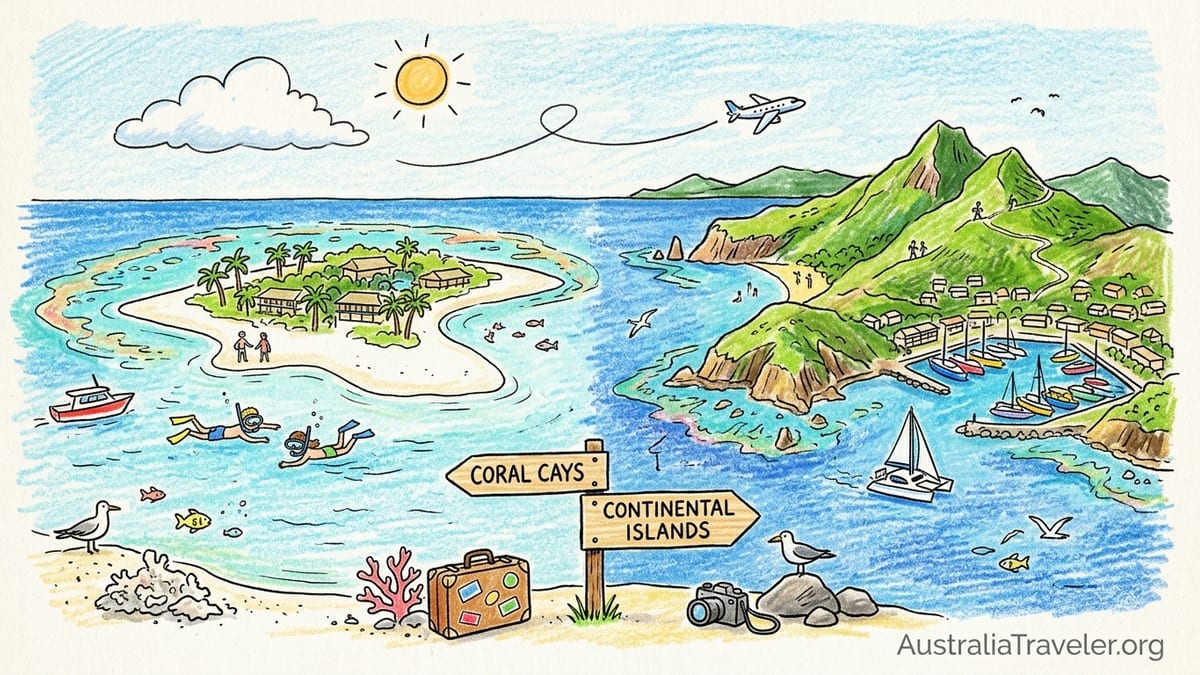
Coral Cays vs Continental Islands: Choosing Your Reef Base
The six islands in this guide fall into two main categories that strongly shape your stay. Coral cays like Heron Island, Lady Elliot Island and Green Island are low, sandy islands formed on top of the reef itself. You step off the beach straight onto coral rubble and reef flats, with snorkelling over bommies only a short swim from shore. These islands are usually small, flat and ringed by shallow water that changes character with the tides.
Continental islands like Fitzroy Island, Hamilton Island and Lizard Island are summits of the mainland mountain range, flooded when sea levels rose. They feel more like rugged, hilly national parks surrounded by fringing reefs. Beaches sit in coves and bays rather than forming complete rings, and snorkeling is often concentrated in a few well-protected areas. Because they are larger and higher, continental islands are more likely to support villages, marinas and a wider range of resort styles.
There is also a difference between highly developed resort islands and deliberately simple eco-focused islands. Hamilton Island and, at the luxury end, Lizard Island operate almost like small towns or self-contained resorts with multiple dining venues and activity desks. Heron and Lady Elliot lean into conservation, marine-biology talks and low-rise, low-light developments that protect nesting turtles and seabirds. Green and Fitzroy sit in the middle: more relaxed than Hamilton but still with bars, pools and casual restaurants that suit short breaks from Cairns.
Understanding these distinctions helps you match the island to your travel style. A coral cay tends to offer richer shore snorkeling and more intense wildlife, but it may have only one restaurant and limited air-conditioning. A continental resort island offers more creature comforts, kids’ clubs and dining choice, but you might need boat trips to access the very best outer reef sites.
Access, Transfers and How Long to Stay
Access is often the deciding factor, especially if you have only a few days. Green Island and Fitzroy Island both sit roughly 45 minutes by boat from Cairns. Green Island’s high-speed catamarans usually run several times a day from the Cairns Reef Fleet Terminal, with day trippers and overnight guests sharing the service. Fitzroy Island has its own "Fitzroy Flyer" passenger ferry, also around 45 minutes, with multiple daily departures and specific sailings allocated to resort guests. Boat schedules can change with maintenance or weather, so an extra night can be smart insurance against cancellations.
Hamilton Island is one of the easiest Great Barrier Reef stays because it has its own airport. Direct flights from cities such as Sydney, Melbourne and Brisbane land on the island itself, and resort rates commonly include simple airport-to-accommodation transfers by bus or private buggy. If you prefer to arrive by sea, there is also a ferry from Airlie Beach. From Hamilton, day boats run to Whitehaven Beach and to outer reef pontoons, which means you can combine a resort holiday with classic reef tours without repacking.
Heron Island and Lady Elliot Island involve an extra step but reward you with a much more immersive reef setting. To reach Heron you first travel to Gladstone, then take either a two-hour launch service or a scenic helicopter transfer from the city to the island. Recent guidance from the resort shows boat transfers priced from around 99 Australian dollars each way per person, with helicopter transfers substantially higher and requiring a minimum number of passengers. Heron’s ferry does not operate every day, so stays of at least three nights mesh better with the schedule and reduce the risk of weather disruptions.
Lady Elliot Island is fly-in only. Small aircraft depart Bundaberg, Hervey Bay, Brisbane (Redcliffe) and the Gold Coast, with flight times of roughly 30 to 100 minutes depending on departure point. Resort information notes a 15 kilogram checked luggage allowance per person on these light planes, which can affect how much dive gear you bring. Flights are booked in tandem with accommodation, and at busy times seats can sell out weeks ahead, so overnight stays of two to four nights are most practical.
Lizard Island, far to the north, feels the most remote of all. Guests connect through Cairns, then board a charter flight that takes about an hour over a broad sweep of outer reef. Current information from the resort’s aviation partner lists return transfers for resort guests at a little over 1100 Australian dollars per person, reflecting the cost of operating small charter planes over long distances. Given that access cost and the all-inclusive rates at Lizard Island Resort, most travelers consider three or four nights the practical minimum, with many staying five nights or more to justify the expense.
What Shore Snorkeling Really Feels Like
Choosing to sleep on the reef is largely about access to the water. On islands with good house reefs you can snorkel when conditions are right simply by walking from your room to the beach. This avoids the structure and cost of repeated boat trips and lets you respond to fleeting moments, such as calm early mornings or a sudden turtle sighting. It is especially valuable for families with children or older travelers who might tire easily on long boat days.
On Heron Island, for example, you can step straight off the sand at high tide to explore coral gardens in the lagoon, then walk back in for lunch and return later when the light changes. On Lady Elliot Island, snorkelers often drift across shallow coral bommies only a few fin kicks from shore, watching manta rays cruise past in season. Green Island’s shoreline tends to be more affected by day traffic and seagrass, but resort guests can access quieter sections outside peak day-trip hours, especially early and late in the day when most visitors have left.
Shore snorkeling is still constrained by tide, swell and safety rules. Some islands close certain entry points at low tide to protect both coral and ankles, and there may be designated swim zones or one-way drift routes. Currents can be surprisingly strong around headlands and passes, even in seemingly calm weather, so following the advice of resort lifeguards and dive shops is essential. On Lady Elliot, for instance, guided drift snorkels and boat drops run to help guests experience channels safely, while on Fitzroy Island staff often recommend specific sections of fringing reef that are best in the prevailing wind.
Compared with boat trips, shore snorkeling also changes the rhythm of your day. Instead of bundling everything into one or two long outings, you might do three or four short sessions, punctuated by naps, meals or kids’ pool time. If a mask strap breaks or a child becomes cold, you are only minutes from your room. For serious snorkelers and underwater photographers, this flexibility can be worth as much as any formal tour, letting you wait for the best sunlight, tide level or fish behavior.
Island-by-Island: Accommodation, Facilities and Example Costs
To give a realistic sense of costs, it helps to look at sample two-night stays for a couple and a family, including transfers and likely on-island spending, based on publicly available rates in late 2026. Actual prices change frequently with sales and seasons, so treat these as broad comparisons rather than fixed quotes.
Green Island Resort usually bundles accommodation with return boat transfers for overnight guests. A lead-in room for two adults can often be found in the mid-to-high hundreds of dollars per night, with shore access to the reef, a swimming pool, and use of some non-motorised water sports equipment. A couple staying two nights might expect to spend around 900 to 1200 dollars on the room, plus additional meals and drinks in the island’s restaurants and bars. Families in larger rooms or interconnecting units should budget extra, although the short transfer from Cairns helps keep overall travel costs modest.
Fitzroy Island Resort works a little differently. Most online rates are room-only, with ferry transfers sold separately on the "Fitzroy Flyer." For a two-night getaway, a couple might pay several hundred dollars for an entry-level resort room, then add return ferry tickets for each person and spending on meals at the island’s main restaurant and beach bar. Because there are limited self-catering facilities in standard rooms, many visitors factor in restaurant dining for most meals. Families may choose one of the island suites or bungalows, and with four ferry tickets, food and optional activities such as glass-bottom boat tours or snorkel hire, a two-night family bill can climb quickly even if the base room rate seems low.
Hamilton Island offers the widest range of price points, from hotel rooms at the Reef View Hotel through to self-contained apartments and adults-only Beach Club suites. Package examples for mid-range hotel stays over three nights, including breakfast and some island transfers, sit in the low thousands of dollars for two people. Breaking that down to a two-night stay for a couple, you might reasonably expect to spend upwards of 1200 to 1500 dollars on accommodation in a hotel-style property, plus meals in the island’s numerous cafes and restaurants. Families using a self-catering apartment with access to the island’s supermarket can spread costs by cooking breakfast and some dinners, although popular tours to the outer reef or Whitehaven Beach add several hundred dollars for a family of four.
Heron Island Resort concentrates its accommodation in low-rise rooms and cabins close to the beach. Lead-in packages may look similar per night to a mid-range mainland hotel, but you need to add the return launch transfer from Gladstone at a published rate from around 99 dollars each way per person. For a couple staying two nights, that could mean roughly 400 dollars just on boat transfers, on top of accommodation and meals in the island restaurant and bar. Because there is only one primary dining venue, food prices are closer to resort levels than city levels. Families must also multiply the transfer cost by four and may need larger rooms or interconnecting units.
Lady Elliot Island Eco Resort publishes tariffs that include some important extras. Overnight rates typically cover accommodation, three daily meals in the island dining room and snorkel gear hire, along with participation in many guided reef activities. Air transfers, however, are a significant separate cost that varies by departure city. For a couple flying from Bundaberg or Hervey Bay, two-night packages with flights and full board often total well into the low thousands of dollars. A family of four flying from Brisbane or the Gold Coast can expect a noticeably higher total once four return airfares are factored in, though they may spend relatively little extra on food or snorkelling once on the island.
Lizard Island sits in its own price bracket. Current information from luxury travel outlets and the resort’s own partners suggests nightly rates for two adults commonly in the several thousands of dollars, including all meals, selected beverages and many activities such as use of motorised dinghies, kayaks and snorkel gear. Return flights from Cairns add another thousand dollars or more for each guest. As a result, a two-night stay for a couple can easily reach five figures in Australian dollars. Children are welcome but the pricing and atmosphere skew strongly to adults, honeymooners and special-occasion trips rather than budget-conscious family holidays.
Beaches, Diving and Marine Wildlife Highlights
Each island has its own character above and below the waterline. Green Island offers a classic crescent of white sand and palm trees, with seagrass meadows just offshore that attract turtles. Because it receives heavy day traffic, many overnight guests time their swims for quieter early mornings and late afternoons. The nearby reef is accessible on included or paid glass-bottom boat tours, and certified divers can book day dives through operators linked to the resort.
Fitzroy Island’s main beach in Welcome Bay is a mix of coral rubble and sand, with clear water in good weather. A signed walking track leads over to Nudey Beach, a photogenic cove that frequently appears in tourism campaigns. Snorkeling along the edges of both bays reveals hard corals, clams and reef fish, though coral recovery in some sections is still ongoing. Simple introductory dives and certified diving are available when demand and conditions allow, and families often split their days between the water and rainforest walks up to the lighthouse lookout.
Hamilton Island itself is better known for its marina, restaurants and Catseye Beach than for spectacular reef off the main shore. The fringing reef in the main bay is quite tidal, and many visitors report better underwater experiences by joining day trips from Hamilton to outer reef platforms or to nearby uninhabited islands. That said, Catseye Beach does host turtles and rays at times, and the ability to paddle a kayak or stand-up paddleboard straight from the resort beach is attractive. The main diving draw here is as a base for boat dives in the wider Whitsunday region rather than shore diving.
Heron Island and Lady Elliot Island are both renowned for their wildlife. Heron sits atop a significant reef platform with dozens of dive sites accessible by short boat trips. Shore snorkellers see schools of reef fish, rays and turtles, and in season may watch reef sharks cruising the shallows at dawn. The island is also a major nesting site for seabirds and, in summer, for green turtles, which means soundscapes of bird calls and occasional restrictions on beach lighting to protect hatchlings. Lady Elliot is famous for manta rays, which gather in large numbers at certain times of year, and for very clear water thanks in part to its location near the edge of the continental shelf.
Lizard Island offers perhaps the most diverse mix of beaches and reefs across its small footprint. Several white-sand beaches ring the island, linked by walking tracks and accessible by kayaks or small motor boats that guests can borrow under resort guidance. Underwater, there are coral gardens suitable for novice snorkellers within short swims of shore, while outer sites such as the Cod Hole are reached by boat and appeal to advanced divers. Because the resort hosts relatively few guests at once, it is common to find yourself sharing a beach or bommie with only a handful of other people.
Restaurants, Activities and What Is Included
When comparing islands, it is important to look beyond room rates to what is included. Green Island Resort typically bundles return boat transfers, daily breakfast and a range of non-motorised water sports such as snorkel gear use for certain hours, kayaks or windsurfers. Guided activities can include reef interpretation talks and occasional guided snorkels at additional cost. Dinner is usually à la carte or buffet in the main restaurant, and you should budget separately for drinks and specialty tours like scuba diving.
Fitzroy Island Resort’s base rates tend to cover your room only. You then book and pay for ferry transfers, snorkel gear hire, glass-bottom boat tours, introductory dives and meals. There is a general store on the island, but many visitors rely on the main resort restaurant and Foxy’s bar and café on the beachfront. This can make Fitzroy feel affordable on first glance but more expensive over a few days if you join multiple activities and eat every meal out.
Hamilton Island is set up almost like a small town, with multiple cafes, bars and restaurants, a bakery, takeaway outlets and a supermarket. Many accommodation deals include return airport or marina transfers and access to island shuttle buses, and some premium properties include breakfast and non-motorised water sports such as catamarans, stand-up paddleboards and snorkel equipment. However, major reef experiences like full-day cruises to outer reef pontoons and scenic flights are separate add-ons and can cost a substantial amount for families.
Heron Island Resort offers a simpler lineup. There is essentially one primary restaurant and bar, with meal packages that can be bundled with accommodation or paid as you go. Guided reef walks at low tide, snorkel safaris and dive trips are bookable with the on-island dive shop. Some scheduled talks by naturalists or marine biologists are included, especially during turtle and bird seasons, reflecting the island’s scientific heritage. Equipment hire for snorkelling may be complimentary for limited periods or chargeable by the day, depending on package.
Lady Elliot Island Eco Resort is one of the few that still operates in a near all-inclusive style. Published information indicates that overnight tariffs include buffet-style breakfast, lunch and dinner, use of snorkel equipment and participation in many guided activities such as reef walks, glass-bottom boat tours and nightly presentations. You still pay for specialty dives, premium drinks and optional extras, but a large portion of your holiday cost is known upfront. This structure, combined with the remote fly-in access, tends to attract travellers who value nature and simplicity over multiple restaurant choices.
Lizard Island Resort is also largely all-inclusive at the luxury end. Stays typically include gourmet meals, selected alcoholic and non-alcoholic beverages, non-motorised water sports, gym access and many guided activities. Use of small motorised dinghies to reach private picnic beaches, packed picnic hampers and daily housekeeping are part of the experience. Extra costs are concentrated in spa treatments, premium wines, private charters and extended diving expeditions. For couples marking honeymoons or big anniversaries, this can create an indulgent, low-friction environment where almost everything is handled once you arrive.
Which Islands Work Best for Day Trips vs Several Nights
Not every island in this list needs multiple nights to feel worthwhile, especially if your time or budget is tight. Green Island is one of the easiest day trips from Cairns, with several hours ashore giving enough time for a glass-bottom boat tour, a snorkel session and a walk through the small interior. If you want to experience the reef overnight without going far, however, one or two nights on Green Island can be surprisingly atmospheric after the last day boat departs and the boardwalks quieten.
Fitzroy Island also works very well as a day trip, and many locals from Cairns use it exactly this way, taking an early ferry over for a hike and snorkel and returning on the last boat. To appreciate the sunsets from Nudey Beach or to fit in both walking trails and multiple snorkelling sessions without watching the clock, a one or two night stay is ideal. Because the island is relatively close to Cairns, it is easy to trim or extend a stay around flight changes.
Hamilton Island, by contrast, really comes into its own over several days. Its direct-flight access and broad spread of restaurants and pools make it feel like a destination resort rather than a short excursion. Three to five nights gives you time to mix pool days, sailing trips, a visit to Whitehaven Beach, and perhaps a day or overnight tour to an outer reef pontoon. It is also a sensible base for a week-long family holiday in the Whitsundays if you want to unpack once and explore from there.
Heron Island and Lady Elliot Island justify at least three nights for most travellers and reward longer stays. Transfer logistics and costs mean a single night would feel rushed and poor value. Spending three to five nights allows you to experience changes in tide and light on the same stretches of reef, watch nighttime turtle activity in season and join both guided reef walks and boat trips. Lizard Island, at the top of the market, is almost never booked for fewer than three nights, since guests have travelled so far and spent so much on access.
Best Islands For Different Travelers
For shore snorkelling fanatics, the coral cays stand out. Heron Island and Lady Elliot Island offer the strongest combination of easy beach access and rich, shallow reefs. You can duck out multiple times a day without boarding a boat, and the water around both islands often hosts turtles, rays and reef sharks in only a few metres of depth. Green Island can be rewarding for house-reef snorkelling if you stay overnight and target quieter early and late sessions.
If your priority is marine wildlife and conservation, Heron Island, Lady Elliot Island and Lizard Island all have strong scientific or eco focuses. Heron and Lady Elliot partner closely with marine park managers and research projects, and both host regular talks by guides trained in marine biology. Lady Elliot’s manta rays, turtle nesting and bird colonies appeal to wildlife photographers willing to accept simple accommodation and small-plane access. Lizard Island combines research station heritage with high-end comfort and is one of the few places where you can enjoy five-star dining after a morning snorkel over world-class coral.
Couples seeking romance and a feeling of escape might gravitate to Lizard Island at the luxury end, or to quieter corners of Hamilton Island such as adults-only Beach Club for a more accessible splurge. Heron Island can feel surprisingly romantic outside peak family holiday periods, especially for divers, with sunset walks along the jetty and starry skies unpolluted by mainland lights. Lady Elliot offers a different kind of togetherness, focused on shared nature experiences rather than spas and cocktail bars.
For families, Hamilton Island and Fitzroy Island are usually the most straightforward. Hamilton’s kids’ clubs, playgrounds, sheltered pools and variety of casual eateries make it easy to keep children entertained even if the weather turns. Direct flights also reduce transit fatigue. Fitzroy Island offers a simpler, more outdoorsy alternative, with short walks, a small pool, beachside café and easy ferry access from Cairns. Green Island can work for one or two nights with kids, but the compact size and daytime crowds may feel limiting for longer stays.
If you are watching your budget yet still want to sleep on the reef, a carefully chosen stay on Fitzroy Island, Green Island or in a self-catering apartment on Hamilton Island often delivers the best combination of cost and experience. Heron and Lady Elliot’s transfer expenses and set meal structures can make them more expensive than they first appear, while Lizard Island is firmly in the luxury bracket. Shoulder seasons and midweek dates can significantly improve value, as can packages that bundle transfers or meals.
The Takeaway
Choosing the best Great Barrier Reef island to stay on starts with an honest look at what you value most. If you want to roll out of bed and into a mask for world-class shore snorkeling, coral cays such as Heron Island and Lady Elliot Island lead the field, trading restaurant choice for reef intensity. If convenience, multiple pools and easy flights matter more than raw wilderness, Hamilton Island and, to a lesser extent, Fitzroy and Green Islands offer familiar resort comforts wrapped in reef scenery.
Access and inclusions shape the real cost of your trip just as much as nightly room rates. Short boat hops from Cairns or Airlie Beach keep Green, Fitzroy and Hamilton more affordable, particularly for families. Fly-in islands such as Lady Elliot and Lizard have higher upfront prices but include meals, equipment and guided activities that reduce on-site spending. When comparing, always add transfers, likely meal costs and at least one or two signature experiences per person, whether that is a guided reef walk, an outer-reef dive or a scenic flight.
For shore snorkelling, Heron and Lady Elliot stand out, with Green as a good overnight choice close to Cairns. For marine wildlife and education, pair Heron or Lady Elliot with talks by resident guides and seasonal turtle or manta viewing. For romance and luxury, Lizard Island is the pinnacle, followed by Hamilton Island’s premium hotels. For families and first-timers, Hamilton Island and Fitzroy balance accessibility with enough reef time to feel you have truly visited the Great Barrier Reef, not just seen it from a boat.
Whichever island you choose, staying overnight lets you experience the quieter, more intimate moods of the reef at dawn and dusk, when day boats have gone and the tide whispers over coral. For many travellers, that is the moment when the Great Barrier Reef stops being a once-off sightseeing tick and starts feeling like a living, breathing place they have briefly called home.
FAQ
Q1. What is the main difference between a coral cay and a continental island on the Great Barrier Reef?
Coral cays such as Heron, Lady Elliot and Green are low, sandy islands formed directly on top of the reef, with shallow water and snorkelling close to shore. Continental islands like Fitzroy, Hamilton and Lizard are higher, rocky outcrops of the mainland range with fringing reefs in bays and around headlands rather than encircling the whole island.
Q2. Which island is easiest to reach for a short stay from Cairns?
Green Island and Fitzroy Island are the easiest, both around 45 minutes by passenger ferry from Cairns. Green Island’s transfers are often bundled with resort packages, while Fitzroy’s "Fitzroy Flyer" usually needs to be booked separately from your accommodation.
Q3. Where is the best shore snorkeling if I do not want many boat trips?
Heron Island and Lady Elliot Island usually offer the richest shore snorkeling because they sit on coral cays with shallow reefs that begin only a short swim from the beach. Green Island can also be rewarding early and late in the day when day visitor numbers are low.
Q4. Which island is most suitable for families with young children?
Hamilton Island is often the most practical for families, thanks to direct flights, multiple pools, kids’ clubs, a supermarket and a wide choice of casual restaurants. Fitzroy Island can also work well for outdoorsy families comfortable with simple facilities and ferry transfers.
Q5. Is it worth paying extra for all-inclusive style islands like Lady Elliot or Lizard Island?
It can be worthwhile if you value predictable costs and intend to spend most of your time on the reef. Lady Elliot bundles meals, snorkel gear and many guided activities, while Lizard Island includes gourmet dining and extensive water sports. Upfront prices are higher, but on-island spending can be lower than at pay-as-you-go resorts.
Q6. How many nights should I stay on a reef island to make it worthwhile?
For islands close to Cairns such as Green and Fitzroy, one to two nights is enough to slow down and enjoy sunsets and early-morning snorkelling. For more remote islands like Heron, Lady Elliot and Lizard, three to five nights is a better target to balance transfer time and cost with time in the water.
Q7. Which island is best for a honeymoon or romantic trip?
Lizard Island is the standout for high-end honeymoons, combining seclusion, fine dining and beautiful beaches. On a more accessible budget, adults-only options on Hamilton Island or a quieter stay on Heron Island outside school holidays can also feel very romantic.
Q8. Do I need to be an experienced snorkeller or diver to enjoy staying on the reef?
No. All of these islands cater to beginners with shallow swim areas, life jackets and guided introductory experiences. Coral cays with calm lagoons, such as Heron and Lady Elliot, are particularly forgiving environments for first-time snorkellers.
Q9. How do tides and currents affect shore snorkeling on these islands?
Tides change water depth and can expose coral close to shore at low tide. Many islands recommend or require snorkelling around mid to high tide and may close certain entry points at very low water. Currents can be strong near channels and headlands, so it is important to follow local advice about the safest times and places to enter the water.
Q10. Which island offers the best balance of cost, convenience and reef access for a first-time visitor?
For many first-time visitors, Hamilton Island provides the best overall balance, combining direct flights, a wide choice of accommodation and easy access to day trips on the outer reef. If you are starting from Cairns and prefer a smaller, more natural setting, a two-night stay on Fitzroy or Green Island can be an excellent first taste of sleeping on the reef.